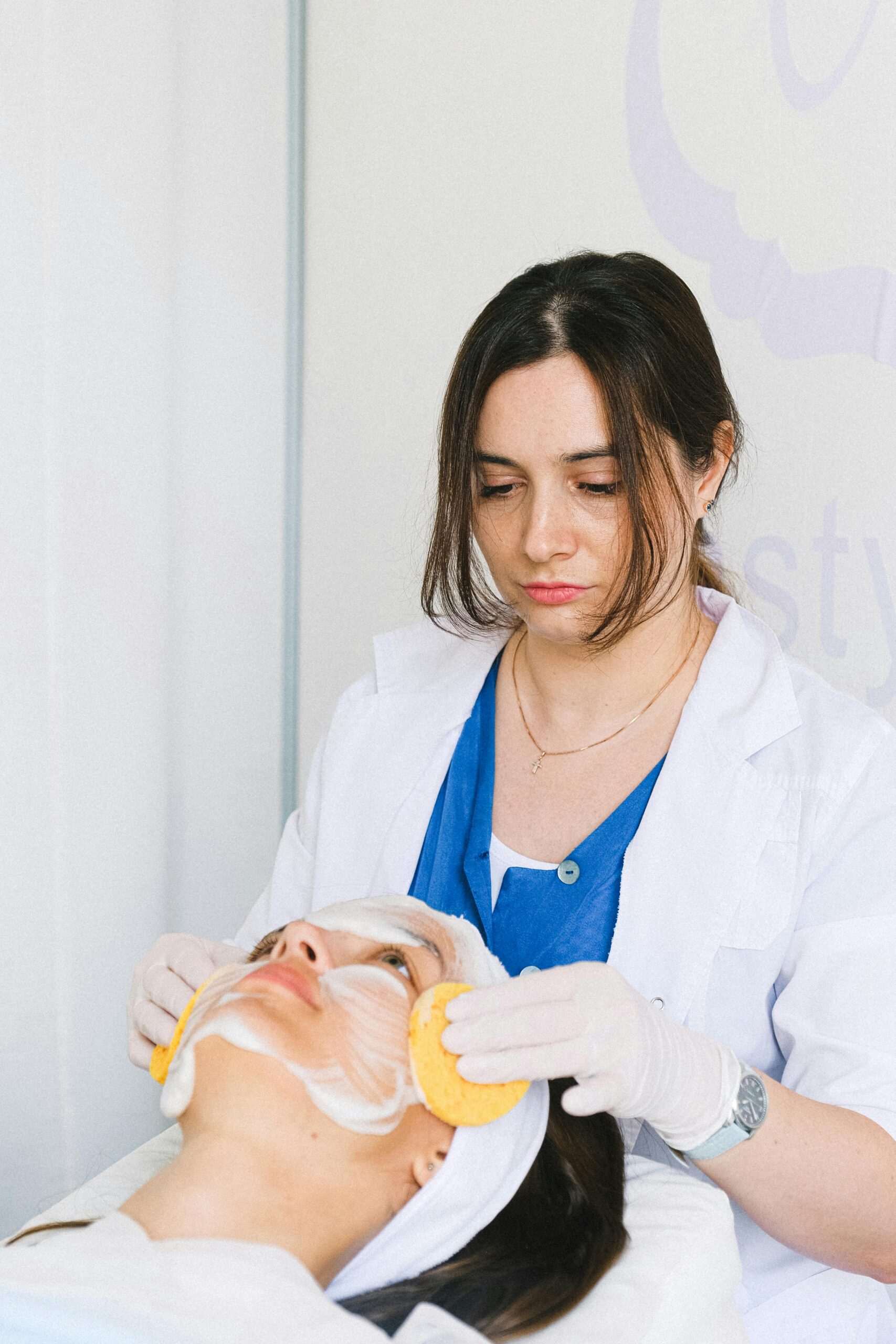
Beauty standards reflect an understanding that changes over time according to societies’ perceptions of aesthetics. In one period, more defined facial features may attract greater interest, while in another, simpler, more balanced, and more natural looks may come to the forefront. Yet regardless of the era, it is clear that aesthetic perception cannot be reduced to a single mold. Every person’s facial structure, expressions, skin characteristics, body proportions, and expectations are different. For this reason, when evaluating beauty standards, the most important issue should be personal harmony.
Today, the most striking shift in the world of aesthetics is that the idea of giving everyone the same look is gradually being left behind. Instead, greater importance is being given to an approach that focuses on results suited to the person’s own face, expression, and anatomy. In other words, the goal is not to resemble someone else, but to move a person’s own features toward a more balanced, refreshed, and harmonious point. Beauty standards are no longer evaluated only in terms of appearance; they are considered together with naturalness, proportion, expression, and self-confidence.
How aesthetic interventions are planned matters greatly. Every procedure performed on the face or body is not only a visible change, but also a step that can affect personal perception and quality of life. A well-planned aesthetic approach aims not to change the person, but to support their natural structure. For exactly this reason, one of the most valued concepts in aesthetic surgery and medical aesthetics today is “personalized evaluation.”
Why Can Beauty Standards Not Be One-Size-Fits-All?
As social influences, fashion, media language, and digital visibility have increased, beauty standards have become a more frequent topic of discussion. However, this visibility can sometimes create the false impression that there is a single ideal. In reality, aesthetically successful results do not come from applying ready-made templates to everyone, but from analyzing personal characteristics correctly.
For example, a nose shape considered ideal for one face may not create the same effect on another. Likewise, details such as the jawline, lip ratio, eye area, or facial oval should be assessed differently for each individual. The same is true in body aesthetics. Since factors such as the abdominal area, breast structure, waist-to-hip ratio, or skin elasticity vary from person to person, the subject of beauty standards cannot be tied to a single conclusion.
For this reason, what matters in aesthetic applications is not copying the trends of the time exactly, but taking the person’s anatomical reality into account. Results that create lasting satisfaction are achieved through this perspective. Compared with short-term likes, results that provide long-term harmony are far more valuable both in terms of a natural look and the person’s ability to feel comfortable with themselves.
Why Is Naturalness at the Center of Today’s Aesthetic Understanding?
In the past, more obvious and easily noticeable aesthetic interventions could be seen as attractive by some people. Today, however, many more people want a natural result that is in harmony with their face and body rather than a look that appears overly altered from the outside. The main reason is that aesthetic procedures are now preferred not only for change itself, but for achieving a more balanced appearance.
A natural look is not a passive goal in aesthetics. On the contrary, it is one of the most difficult outcomes and one of the ones that require the most care. Naturalness demands a measured approach, anatomical knowledge, aesthetic vision, and technical experience. Especially in procedures performed on the face, it is extremely important to preserve the person’s facial expressions, proportions, and overall integrity of expression. The same applies to body aesthetics. The intervention must be compatible with the person’s overall silhouette.
Assoc. Prof. Dr. Ulaş Bali specializes in plastic and reconstructive surgery. He completed his medical education at Dokuz Eylül University Faculty of Medicine and his specialty training at Celal Bayar University Faculty of Medicine. Throughout his career, he has worked at institutions such as Celal Bayar University Hospital, Ağrı State Hospital, Kartal Dr. Lütfi Kırdar Hospital, and Istanbul Medical Park Hospital, and has performed more than 35,000 successful surgeries. This background also shows that naturalness-focused aesthetic planning is not merely visual, but a serious field of medical expertise.
Why Is a Personalized Approach in Aesthetics So Important?
One of the biggest mistakes made around beauty standards is the idea that a good result means everyone reaches the same look. In aesthetics, however, one of the most important measures of success is that the result looks like it belongs to the person. Procedures that do not distort the individual’s facial features, harden their expression, or turn them into someone different are evaluated much more positively.
A personalized approach is not limited only to physical evaluation. It also includes understanding the person’s expectations, lifestyle, what they want from the procedure, and how they view change. Some people want a more noticeable transformation, while others only want to look more refreshed, more lifted, or more balanced. Procedures performed without considering these differences may appear technically successful, yet fail to create personal satisfaction.
The areas in which Assoc. Prof. Dr. Ulaş Bali works include surgical procedures such as rhinoplasty, facelift, eyelid surgery, liposuction, tummy tuck, breast aesthetics, neck contouring, brow lift, lip aesthetics, chin implant, and post-pregnancy aesthetics, as well as medical aesthetic applications such as Botox, fillers, and mesotherapy. This variety shows that different plans can be made according to different needs. The topic of beauty standards gains meaning precisely here, because instead of a single ideal, options suitable for the individual should be evaluated.
The Relationship Between Beauty Standards and Self-Confidence
Although aesthetic procedures are often discussed only through appearance, their psychological dimension should not be overlooked. Sometimes people consider aesthetic support because of a feature that has bothered them for years. That discomfort may stem from a nose that seems out of harmony with the face, a tired expression around the eyes, or bodily changes after pregnancy. What matters here is that the change should be shaped not by outside pressure, but by the person’s own needs and expectations.
This is also why a direct connection is made between self-confidence and aesthetics. When a person feels better about themselves, they may present a more comfortable stance in social life, business life, and everyday communication. Even so, the purpose of an aesthetic procedure should not be the pursuit of perfection. Realistic goals, healthy communication, and personal harmony allow the process to move forward in a much healthier way.
It is stated that Assoc. Prof. Dr. Ulaş Bali’s professional approach focuses on enhancing natural beauty and self-confidence. The aim of helping patients look and feel their best also supports this approach. This perspective makes it possible to move the subject of beauty standards beyond a superficial discussion of appearance and place it in a more holistic framework.
Why Are Expertise and Experience Decisive?
In aesthetic procedures, the success of the result depends not only on the request itself, but also on how accurately that request is interpreted. Sometimes a patient asks for a specific procedure, yet the real need may be to assess another area or make a more measured plan. For this reason, it is not enough for a physician simply to be able to perform the procedure; they must also be able to foresee which procedure is truly appropriate.
Plastic and reconstructive surgery is a field that requires great care and serious experience. The ability to evaluate facial and body proportions, analyze tissue structure correctly, and achieve a natural result develops not only through theoretical knowledge but also through intensive practical experience. For this reason, the field experience of a physician who has performed more than 35,000 successful surgeries is an important indicator. Seeing a large number of different cases helps refine aesthetic judgment.
In a subject as open to interpretation and changeable as beauty standards, experience becomes even more important. Not every request may be aesthetically right, and not every trend may suit every face. What is decisive here is expertise that can read the person’s characteristics correctly and create a safe plan accordingly.
Beauty standards are a concept that changes over time but never fits into a single mold. Today, the understanding that stands out in the aesthetic world is not to resemble others, but to reach the most suitable, most natural, and most balanced result for one’s own face and body. For this reason, aesthetic applications should be guided not by fashion, but by personal harmony.
Naturalness, moderation, proportion, and individualized planning form the basis of today’s aesthetic approach. Viewed from this perspective, education, experience, and a patient-centered approach become highly decisive in plastic and reconstructive surgery. Assoc. Prof. Dr. Ulaş Bali’s specialist background, the institutions where he has worked, his extensive case experience, and his broad range of surgical and medical aesthetic applications are among the important elements that support addressing beauty standards on a more conscious, balanced, and personal basis.