People who want rounder, fuller, and more defined buttocks often begin with a simple question: can exercise alone create that result? Squats are one of the first methods that come to mind, and for good reason. They are one of the most effective lower-body exercises for activating the gluteal muscles and improving overall lower-body strength. However, when the goal is not only firmer muscles but also a more noticeable change in contour and volume, the answer becomes more nuanced.
In aesthetic planning, it is important to separate muscle development from visible shape change. Assoc. Prof. Dr. Ulaş Bali emphasizes that the appearance of the buttocks is influenced not only by muscle tissue, but also by genetics, fat distribution, pelvic structure, skin quality, and overall body proportions. For that reason, exercise can be very beneficial, but it does not create the same type of transformation for every person.
What Squats Can Realistically Do
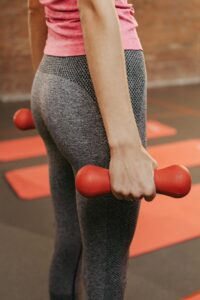
Squats target the gluteus maximus and other supporting lower-body muscles. When performed correctly and consistently, they can strengthen the buttocks, improve muscle tone, and help the area look firmer. In some people, especially those who follow a structured program with progressive resistance and good nutrition, squats may also contribute to a modest increase in muscle volume.
This means squats can improve the buttocks from a functional and visual standpoint. The area may look tighter, stronger, and better shaped than before. For many people, this is already a meaningful improvement. Exercise also supports posture, balance, and general health, which makes it valuable beyond aesthetic goals alone.
Why Exercise Does Not Produce the Same Result in Everyone
The limitation of exercise is not that it fails, but that it works within the boundaries of the body’s existing anatomy. Some people naturally have rounder buttocks and respond more visibly to glute training. Others may train with discipline for months and still feel that the change remains subtle. That difference is often related to genetics, body composition, hormone profile, and skeletal structure rather than effort alone.
Squats can build muscle, but they do not change where the body stores fat, they do not fill side depressions, and they do not create a dramatically fuller projection in every anatomy. This is why a person may become stronger and firmer without seeing the exact silhouette they had in mind. When expectations are not aligned with these realities, exercise can seem ineffective even when it is actually working as intended.
When Surgical Options Enter the Discussion
For people who want a clearer increase in fullness or a more noticeable change in body proportions, surgical buttock enhancement may become part of the conversation. Buttock augmentation is generally performed by transferring the patient’s own fat to the buttock area after liposuction from selected regions such as the waist, abdomen, or hips.
This approach does more than increase volume. It can also improve the waist-to-hip ratio by reducing excess fat in adjacent areas and adding fullness where it is aesthetically needed. As a result, the transformation is not limited to stronger muscles; it can produce a more visible contour change. Assoc. Prof. Dr. Ulaş Bali plans these procedures by evaluating the entire body silhouette rather than focusing on the buttocks in isolation, with the goal of achieving a balanced and natural-looking outcome.
Exercise and Surgery Are Not Opposites
It is not accurate to think of training and surgery as competing methods. In many cases, they serve different purposes. Exercise improves muscle quality, helps maintain physical fitness, and can support long-term results. Surgery, on the other hand, can provide structural contour changes that exercise alone may not deliver.
For someone who wants stronger glutes, improved tone, and a gradual natural change, squats may be the right place to start. For someone whose main concern is flatness, lack of projection, or the desire for a more pronounced hourglass proportion, surgery may offer a more direct answer. The best choice depends on the person’s anatomy, aesthetic goal, and tolerance for recovery.
Which Approach Is More Suitable?
A training-based approach may be more suitable for people who are patient, enjoy exercise, and want mild to moderate improvement through natural muscle development. It is also ideal for those who prioritize overall fitness and are comfortable with gradual progress.
Surgical treatment may be more suitable when a person wants a more dramatic change in shape, when the buttocks are genetically flat, or when exercise has already been tried consistently without delivering the desired aesthetic result. In this context, individualized evaluation becomes essential. Assoc. Prof. Dr. Ulaş Bali considers body proportions, available fat reserves, skin characteristics, and patient expectations in order to determine whether surgery is likely to provide the benefit the patient is seeking.
So, do squats make the buttocks bigger? They can help develop the glute muscles and improve firmness, shape, and strength. In some cases they can contribute to a fuller look, but their effect on visible volume remains limited by anatomy. They are highly useful, but they are not a universal solution for everyone seeking a substantial aesthetic change.
For people who want more obvious fullness and contour enhancement, buttock augmentation can offer results that exercise alone may not achieve. The key is not choosing the “better” method in general, but identifying the method that best matches the person’s body and expectations. When the goal is defined clearly and the plan is tailored accordingly, both training and surgery can play a meaningful role in buttock aesthetics.