Patients travelling for surgery rarely hesitate because of the operation itself. They hesitate because of everything around it. Who meets me at the airport, where do I stay, how many days will I be away, who do I call at two in the morning, and what happens once I fly home. These are reasonable questions and they deserve plain answers. This guide sets out what a treatment journey to Istanbul actually looks like, day by day, from the first message to the follow up months after you have returned home.
Before You Travel: The Online Consultation
Everything begins before the flight. You send photographs taken from the angles we ask for, along with your height, weight, medical history, current medications and what you would like to change. Dr Ulas Bali reviews these and an online consultation follows, where the suitable options, the realistic result and the limits are discussed openly. If a procedure is not appropriate, that is said at this stage rather than after you arrive.
Once a plan is agreed, the proposed operation, the expected length of stay, the recovery timeline and the costs are set out clearly before you commit to dates. Blood tests and any medical clearance needed from your own doctor are organised before travel, so no time is lost once you are here.
Choosing Your Dates
Most body procedures require seven nights in Istanbul, facial procedures five to seven, and combined operations occasionally longer. The length of stay is driven by the follow up checks and by the point at which flying becomes safe, not by convenience. Booking flexible return flights is sensible, because occasionally a patient benefits from an extra day before travelling.
Day One: Arrival and Examination
You arrive and settle in, and either the same day or the following morning you attend an in person consultation. This is where the plan agreed online is confirmed against what is actually in front of us. Measurements and surgical markings are discussed, pre-operative photographs are taken, and the consent process is completed with time to ask questions. Blood tests, an ECG and any further checks required by the anaesthetist are completed at the hospital, and the anaesthetist sees you personally.
Day Two: Surgery
Admission is in the morning after fasting from midnight. Surgical markings are made while you are standing, because the planning of an abdominoplasty or a breast lift depends on how tissue sits with gravity. The operation is performed in a fully accredited hospital with a dedicated anaesthetic team. Depending on the procedure, the operation takes between two and six hours.
You wake in recovery and are then transferred to your room. Most patients stay at least one night in hospital, and longer after larger combined procedures. Pain relief is given on a schedule rather than on request, and you are helped to walk a short distance the same evening, which is the single most effective step in preventing blood clots.
Days Three to Five: The Early Recovery
You return to the hotel with your garment fitted and your medication explained in writing. These days follow a steady pattern: dressing changes, short walks indoors, plenty of fluids and protein, and rest in between. You have a direct line of contact with the team, and a clinic review is arranged if anything needs to be looked at.
Day three or four is usually the turning point. Swelling peaks around then and begins to settle, energy improves, and most patients feel comfortable taking a slow walk outside. This is also the honest low point for some patients, and knowing in advance that it is expected makes it far easier to manage.
Day Six: The Final Check
You attend the clinic for a full review. Dressings are changed, any drains are removed if they were used, stitches are checked, and the garment is adjusted or replaced as the swelling changes. You are given your discharge summary, your medication plan for the weeks ahead, scar care instructions and, where an airline requires it, confirmation that you are fit to fly.
Day Seven: Flying Home
On the day of departure, the advice for the flight itself is simple and important: wear your compression garment, drink water regularly, avoid alcohol, and stand and walk the cabin at least once an hour. For long haul flights, particularly to Australia, your surgeon may advise additional measures and in some cases a slightly longer stay before departure.
After You Return Home
The relationship does not end at the airport. Follow up continues remotely, with photographs reviewed at agreed intervals through the early weeks and again at three and twelve months. You keep a direct line of contact for questions, and most concerns in the early weeks are resolved with a message and a photograph. If something needs attention locally, we help you understand what to ask of your own doctor. Patients who later choose a second stage procedure simply return, often a year or more later.
Safety, Accreditation and Who Operates
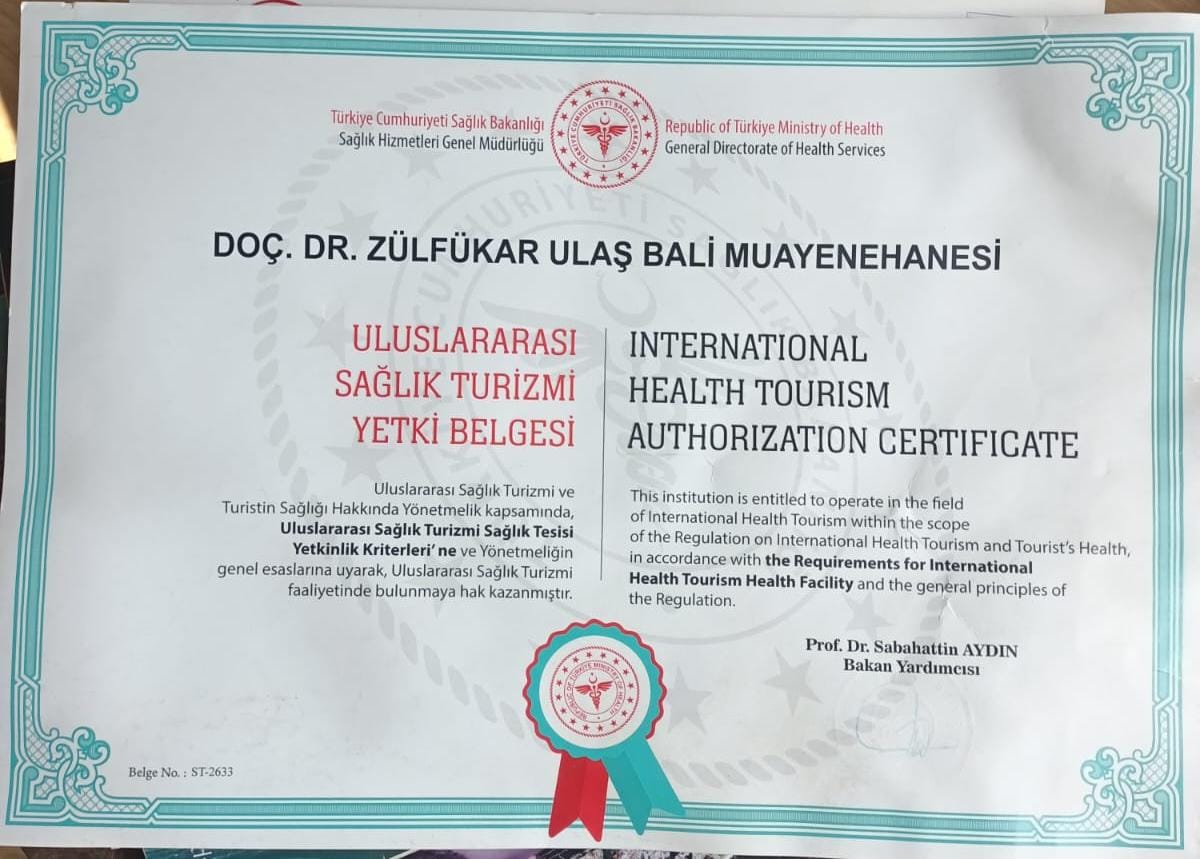
Two questions matter more than any other when choosing where to travel, and both deserve a direct answer. First, who performs the operation. Your surgery is performed by Dr Ulas Bali. Second, where it is performed. Operations take place in hospitals accredited by the Turkish Ministry of Health, with a full anaesthetic team and intensive care support available on site. Our clinic also holds the health tourism authorisation issued by the Ministry of Health, and the documentation is available to any patient who asks to see it. You can read more about our background on the about us page, or see the full range of procedures under surgical treatments.
Frequently Asked Questions
How many days do I need to stay in Istanbul?
Usually seven nights for body procedures and five to seven for facial procedures. The exact number is confirmed with your surgical plan.
Where will I stay during treatment?
Accommodation and local travel are discussed when your dates are agreed, so the arrangements are settled before you fly rather than left to chance.
Can someone travel with me?
Yes, and it is encouraged, particularly for larger procedures. Let the clinic know in advance so the arrangements account for your companion.
When can I fly after surgery?
Typically five to seven days, depending on the procedure. Your garment, hydration and regular movement during the flight all matter.
What happens if I have a problem once I am home?
You keep a direct line of contact with the team. Most questions are answered remotely, and we help you arrange local care if it is ever needed.